

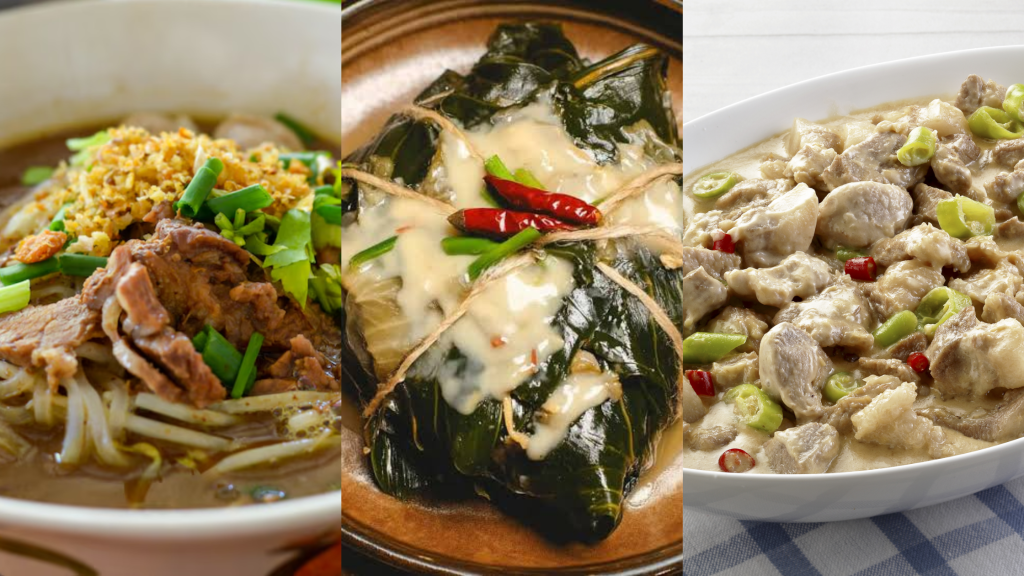
Photos from Recepedia, Kusina Secrets, and Home Foodie.
The way to the heart is through the stomach, and what better way to fall in love with Bicol than through its local cuisine? Known for its fiery spice and mellow coconut milk, locally known as gata, Bicolano cuisine adds an exciting dimension to the broader Filipino culinary scene through its unique use of regional ingredients. This style of cooking is oftentimes referred to as ginataan, a rich culinary tradition that you will find everywhere in Bicol.
Give your taste buds a trip around Bicol with these five local dishes:
Pinangat
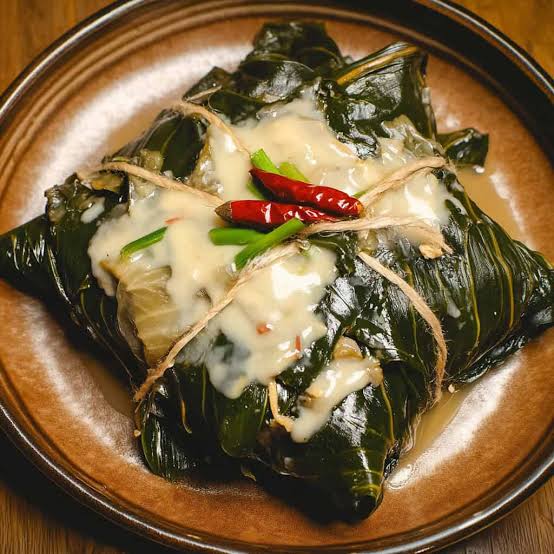
Photo from Kusina Secrets.
Pinangat, also known as tinuktuk, is a packet made from gabi leaves, stuffed with minced meat (either pork, fish, or crab meat) and spices. It is slowly simmered in gata to give it a rich, creamy texture that is flavorful enough to be also enjoyed as a spread on bread.
The dish is so deeply woven into local culture that it’s even celebrated in a festival in Camalig, Albay, from the 10th of June to the 24th. Tourists often visit during this time to experience the vibrant festivities, which also include a cooking contest among the locals to determine who can cook the best pinangat. People would also set long tables where everyone eats pinangat together and distribute the food to others in Camalig. In true Filipino fashion, food brings people together.
Laing
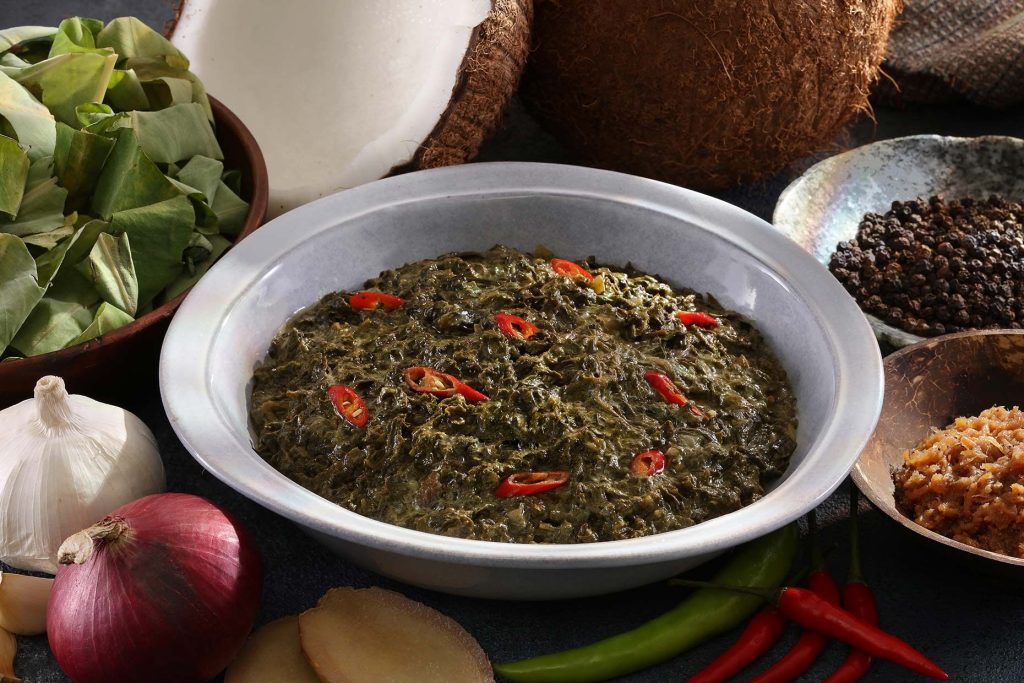
Photo from Foodpanda.
While it also uses the same core ingredients of gabi leaves and gata like pinangat, laing is a dish that features shredded gabi leaves simmered with meat, spices, and shrimp bagoong in a generous amount of gata. It takes a while to simmer it all down for the leaves to be completely soft and for the gata to become oily. Sometimes, more gata is poured on top of the dish as a garnish to balance the oily profile.
Because both dishes share the same ingredients, laing is also called pinangat, which can be confusing for some. The difference between laing and pinangat is in their cooking methods; pinangat wraps its ingredients inside the gabi leaves, while laing has shredded gabi leaves.
You can find laing in local carinderias and restaurants in Bicol. However, if you’re in Naga City, you can visit Geewan, a restaurant known for specializing in Bicolano cuisine. Geewan is located at P. Burgos Street, Barangay Santa Cruz, Naga City, Camarines Sur.
Kinunot
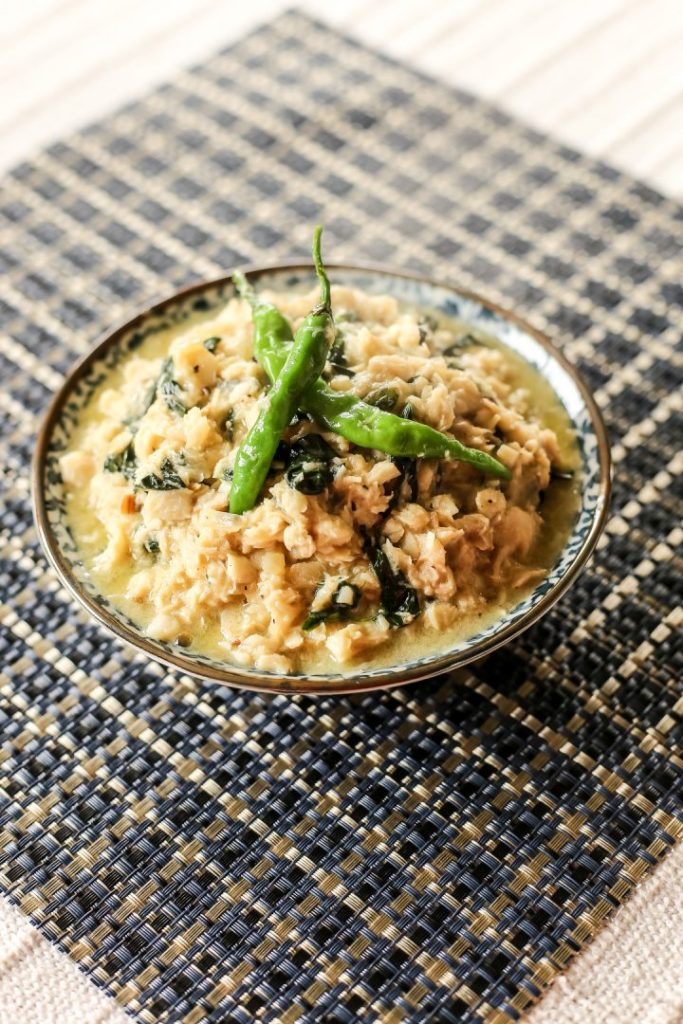
Photo from Ang Sarap.
For those who prefer seafood, kinunot is a great choice. The name of the dish translates to “shredded,” which references the flaked stingray or shark meat. It is paired with malunggay, simmered in gata, and empowered with hot spices. Sometimes, modern eateries replace stingray and shark meat with more accessible fish meat because they are difficult to source. This creamy dish offers a good balance of heat with the seafood flavors, making it a great lunch meal by the sea.
Chef Doy’s Gourmet Restaurant in Naga City offers this dish on its menu as it elevates Bicolano dishes while keeping the cooking methods authentic. You can visit the restaurant at Cereza Compound, Magsaysay Avenue, Naga City, Camarines Sur.
Bicol Express
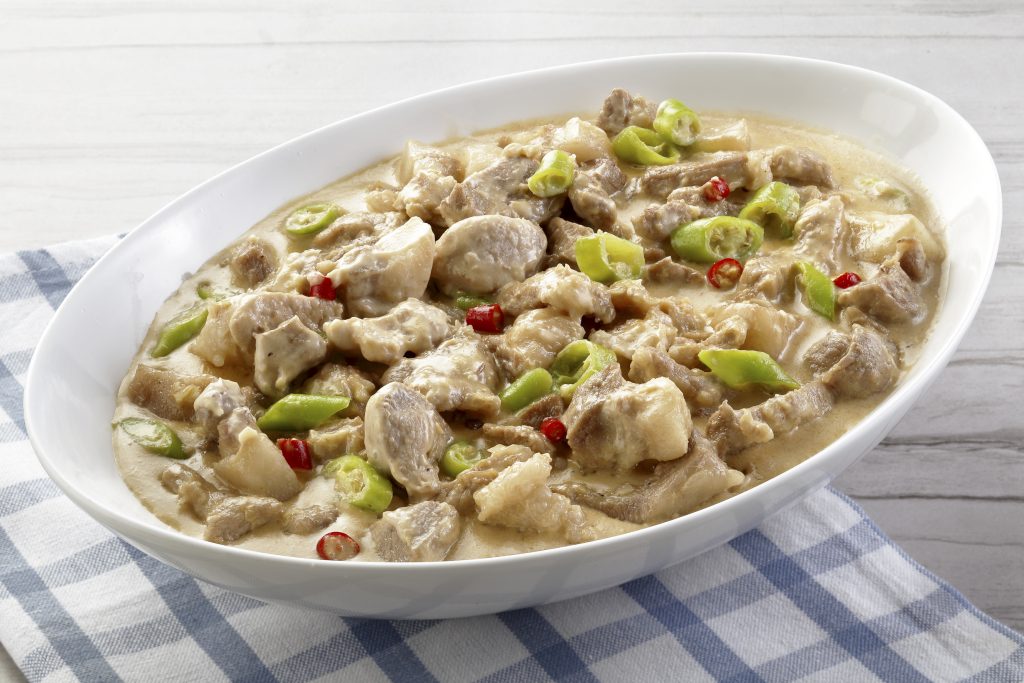
Photo from Home Foodie.
No culinary tour is complete without a dish that’s famously named after Bicol. Arguably the most famous Bicolano dish because of its name, Bicol express is a stew of pork and spices — but the spices are stronger because it uses both red and green chili peppers.
Interestingly, Bicol express isn’t exactly from Bicol, but it was influenced by its flavors. The dish was named by Cely Kalaw, who made the dish for a cooking contest in Malate, Manila in the 1970s. While Cely was originally from Laguna, she spent her childhood in Bicol, where she learned the cooking techniques and the use of the local ingredients.
Long before this dish gained its name, however, Bicolanos would sell a similar pork and chili dish to passengers in Sipocot Station, one of the stations of the Philippine National Railway (PNR) in Camarines Sur in the 1960s. After PNR prohibited food selling within its train stations, the dish became unknown for a while. Thus, Cely reintroduced this dish to more Filipinos across the country and named it in honor of the train service on PNR’s South Main Line.
Kinalas
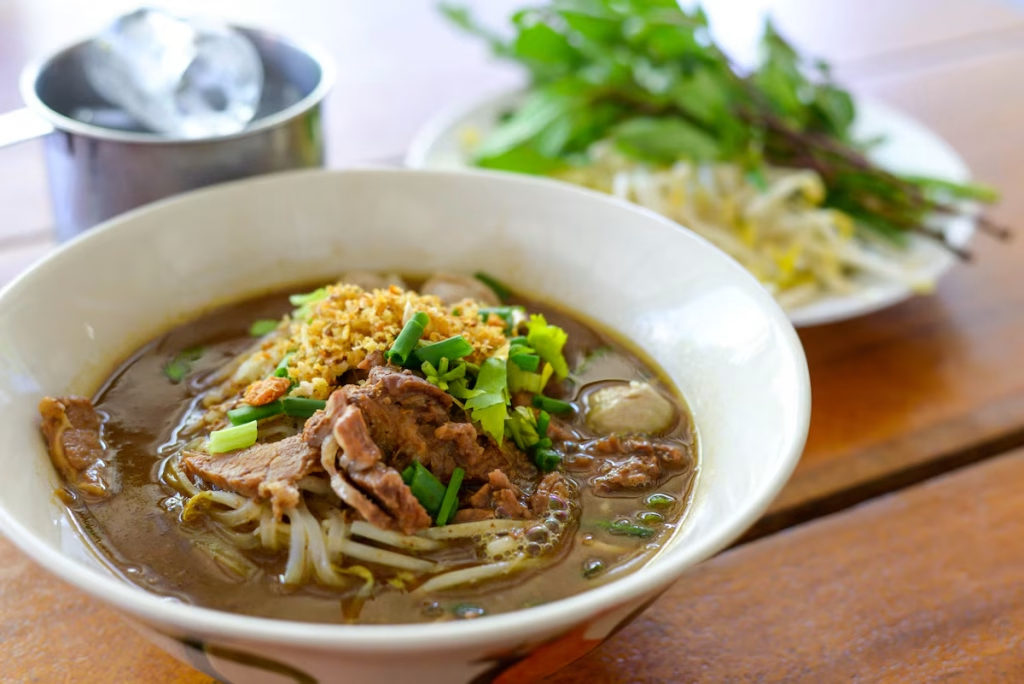
Photo by Recepedia.
A comfort food for Bicolanos without the chili and the coconut, kinalas is a hearty noodle dish with its sauce made from a gravy of brains from a pig or a cow, which thickens the noodle’s broth. The dish’s name came from the root word “kalas,” which refers to how easily the meat comes off the bone. It may be daunting to try this dish because of its ingredients, but it has become a famous dish that attracts tourists to Naga City.
While there are tons of eateries across the city that serve kinalas, Cha Kamot is the most famous place that locals and tourists choose to get their kinalas. Plus, you can visit Cha Kamot at Solid Street cor. Corregidor Street, Brgy. Dayangdang, Naga City.
Your Bicol culinary tour starts here at Easybus PH
After indulging in the spicy and coconut-rich flavors of Bicol, a great way to cool down is to drink a cold glass of buko juice. If reading about pinangat and kinalas already has your mouth watering, it’s time to stop scrolling and book a trip to Bicol through www.easybus.ph, where your Bicol food trip is just a few clicks away! Avoid the long and exhausting queues at bus stations and save your energy for the feast ahead — after all, stress isn’t good for the tummy.